Looking for the best mitre saw? We score every mitre saw and chop saw on this site on its listed specs and today's price, then rank them. Use the filters to narrow it down by blade size, power, bevel or brand, or read our picks for each job below.
No mitre saws match those filters. Try widening your budget or clearing a feature.
Why it stands out
Why it stands out
Why it stands out
Why it stands out
Why it stands out
Why it stands out
Why it stands out
Why it stands out
Why it stands out
Why it stands out
Why it stands out
Why it stands out
Why it stands out
Why it stands out
Why it stands out
Why it stands out
Why it stands out
Why it stands out
Why it stands out
Why it stands out
Why it stands out
Why it stands out
Why it stands out
Why it stands out
Why it stands out
Why it stands out
Why it stands out
Why it stands out
Why it stands out
Why it stands out
Why it stands out
Why it stands out
Why it stands out
Why it stands out
Why it stands out
Why it stands out
Why it stands out
Why it stands out
Why it stands out
Why it stands out
Why it stands out
Why it stands out
Why it stands out
Why it stands out
Why it stands out
Why it stands out
Why it stands out
Why it stands out
Why it stands out
Why it stands out
Why it stands out
Why it stands out
Why it stands out
Why it stands out
Why it stands out
Why it stands out
Why it stands out
Why it stands out
Why it stands out
Why it stands out
Why it stands out
Why it stands out
Why it stands out
Why it stands out
Why it stands out
Why it stands out
Why it stands out
Why it stands out
Why it stands out
Compare 194 mitre saws, stands and blades from a trusted UK retailer. Sliding, compound and cordless saws in 216mm, 254mm and 305mm, priced and ranked in one place.
A mitre saw makes fast, accurate crosscuts and angles in timber. Pick the right size and type and it will earn its place on site or in the workshop.
We make finding the right mitre saw for your work quick and simple.
Search 194 mitre saws, stands and blades. Filter the saws by blade size, saw type, voltage, price and brand.
Every saw shows the blade size, cutting capacity, mitre and bevel ranges, weight and warranty where the maker states them. No guesswork.
We link directly to the retailer with live prices, with 0% finance available on many tools. Saving you time and money.
Courier orders usually arrive within 1 working day, with a 1-hour delivery slot sent by text or email. Delivery covers the whole UK.
Live prices, honest specs and a trusted UK retailer, all in one place.
The best mitre saw is the one that cuts the widest and thickest timber you use, runs on the power you have and fits the space you work in. A kitchen fitter, a decking installer and someone fitting new skirting at home all need something different. So rather than crown one winner, here are our picks by job from the mitre saws we list from My Tool Shed.
We have not put these saws through a workshop test. The picks come from each saw's listed specs, its score in the ranking above and how it compares with other saws at the same price. Prices move every day, so we give a rough figure here. The ranking shows today's price.

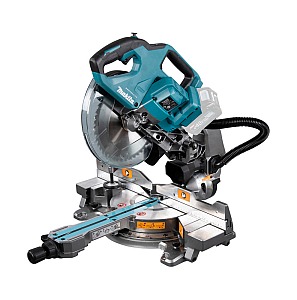
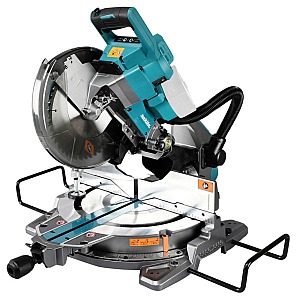
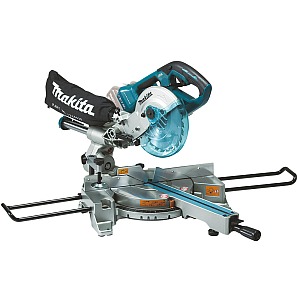
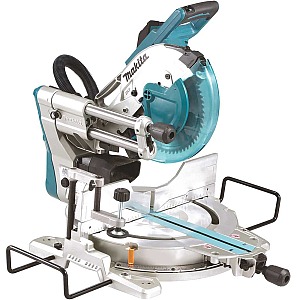
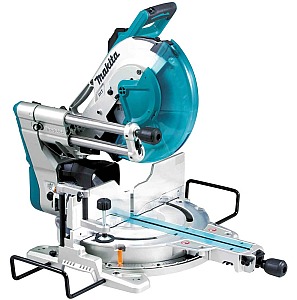
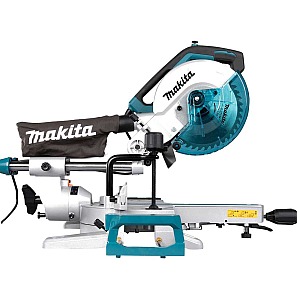
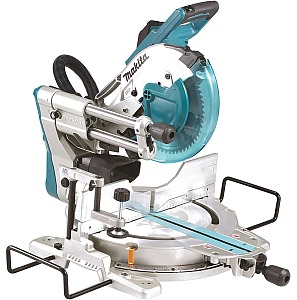
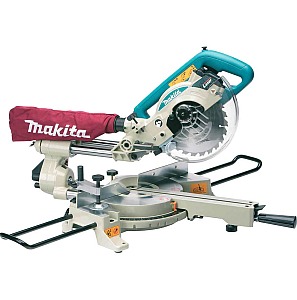
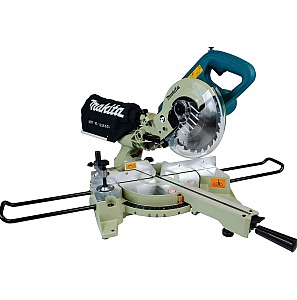
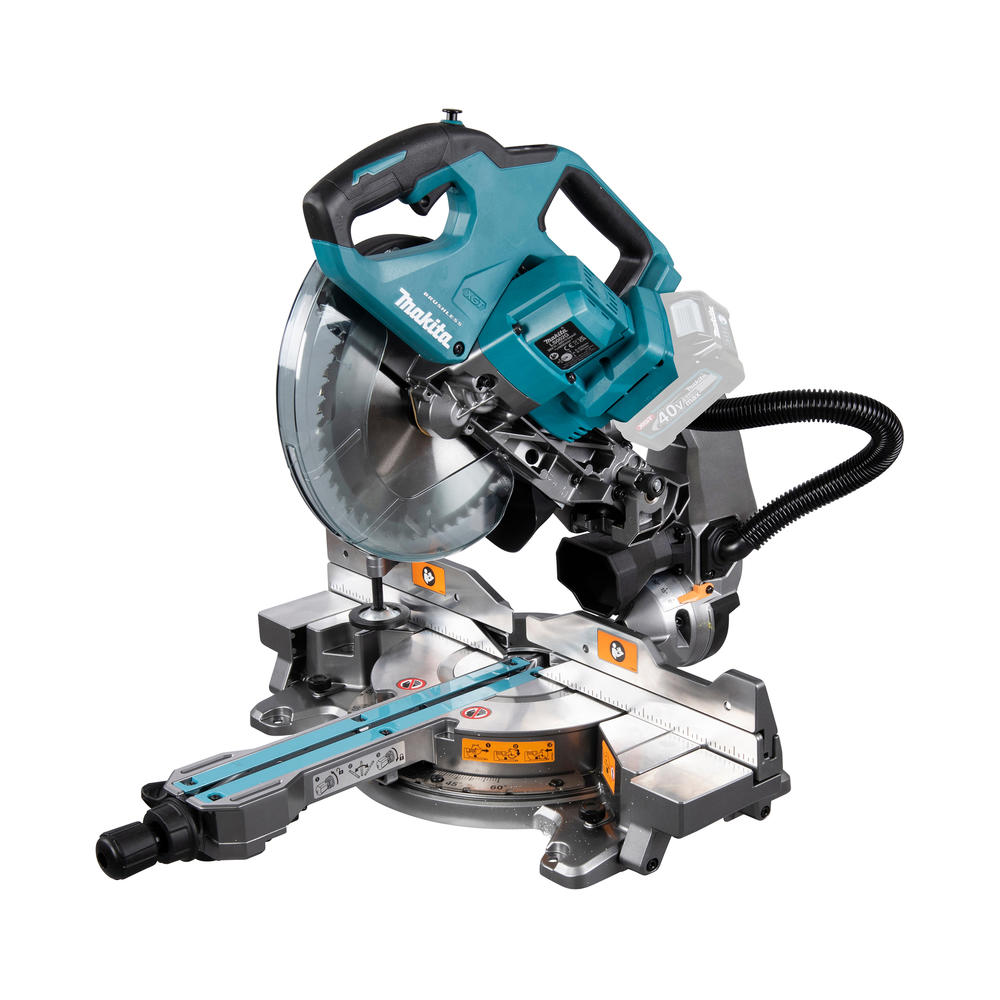
The Makita LS002G tops our ranking. It's a 216mm sliding compound mitre saw on Makita's 40V XGT batteries, with a brushless motor, an electric brake and soft start. The head tilts 48 degrees both ways and the table swings 60 degrees left and right, so skirting, architrave, door linings and flooring never need turning round. It cuts 312 x 70mm at 90 degrees and weighs 16.4kg.
It pairs with a Makita extractor through AWS (Auto-start Wireless System), so the vacuum starts when the saw does and dust collection takes care of itself. It's sold as a bare unit at around £800, which makes most sense if you already run XGT packs. Our Makita cordless mitre saws page compares it with the LXT models.
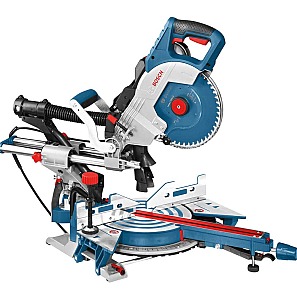
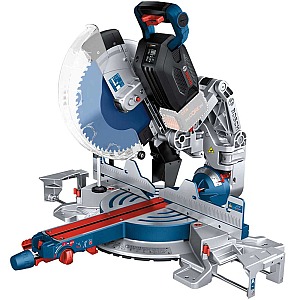
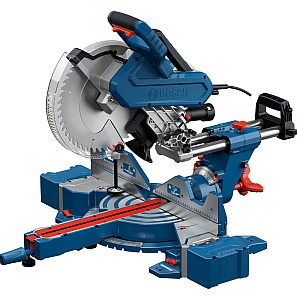
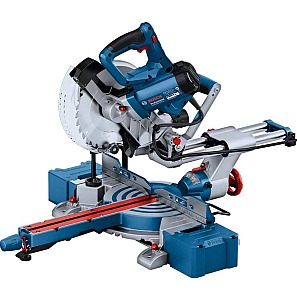
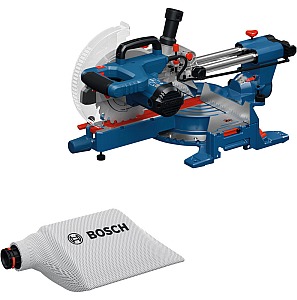
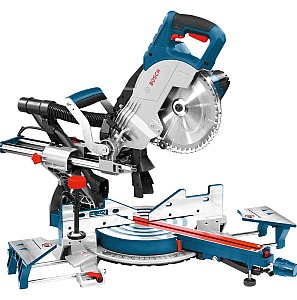
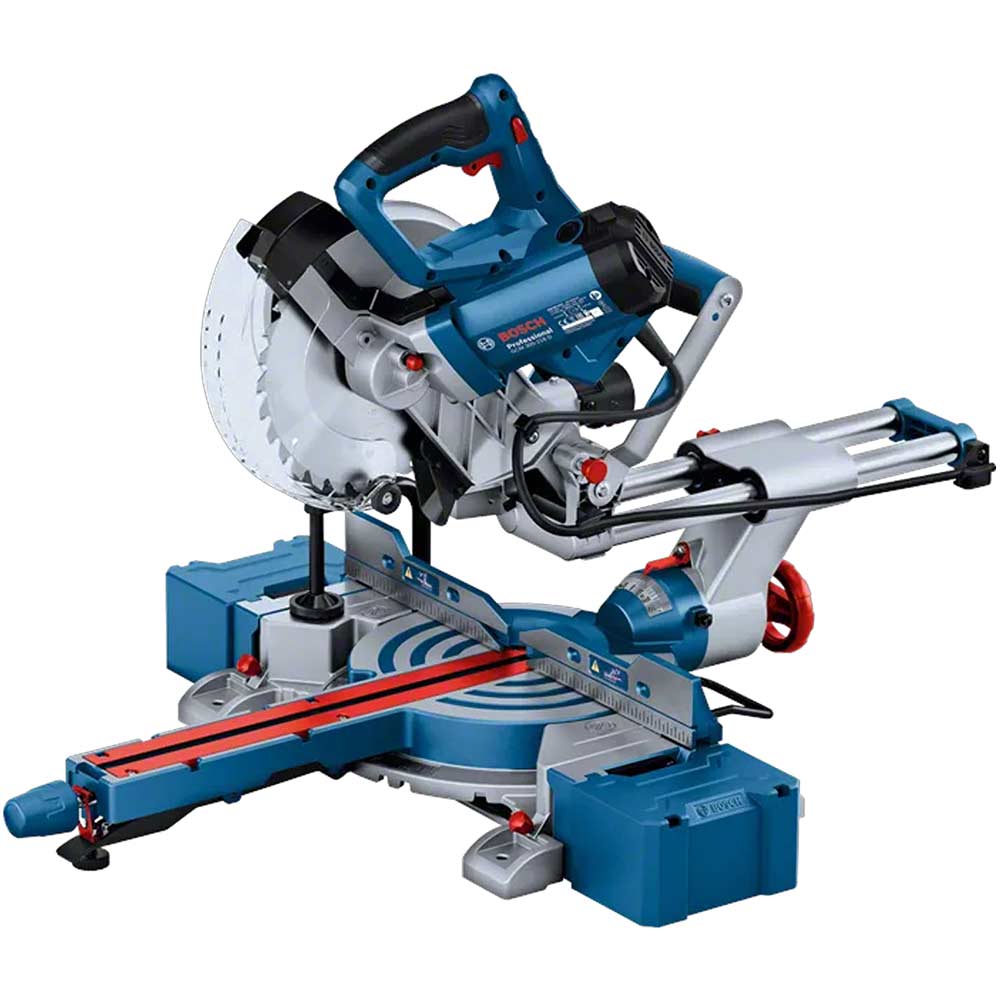
For a mains saw that lives in a garage or workshop, the Bosch GCM 305-216 D gives a lot for around £450. It's a 216mm dual bevel sliding saw that tilts 47 degrees each way and mitres 48 degrees both sides, with twin lasers to line up the cut. It cuts 305 x 70mm square, 215mm wide at a 45 degree mitre and 305 x 42mm at a 45 degree bevel. It weighs 16.8kg and comes with a dust bag.
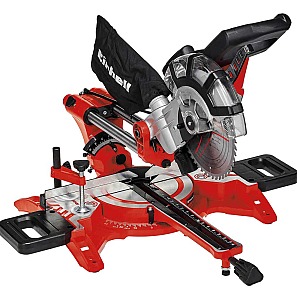
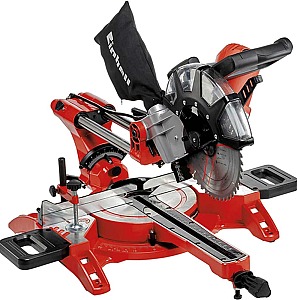
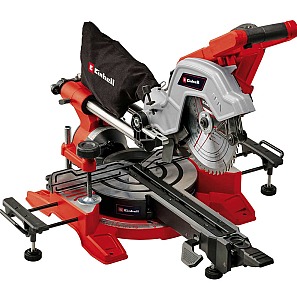
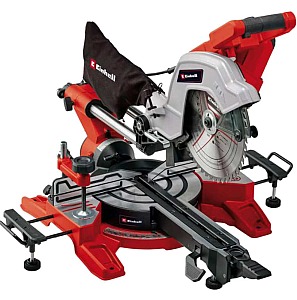
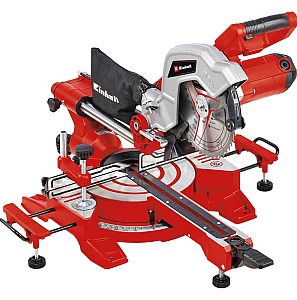
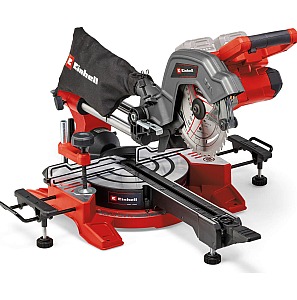
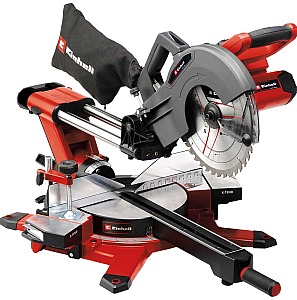
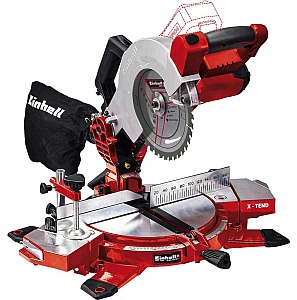
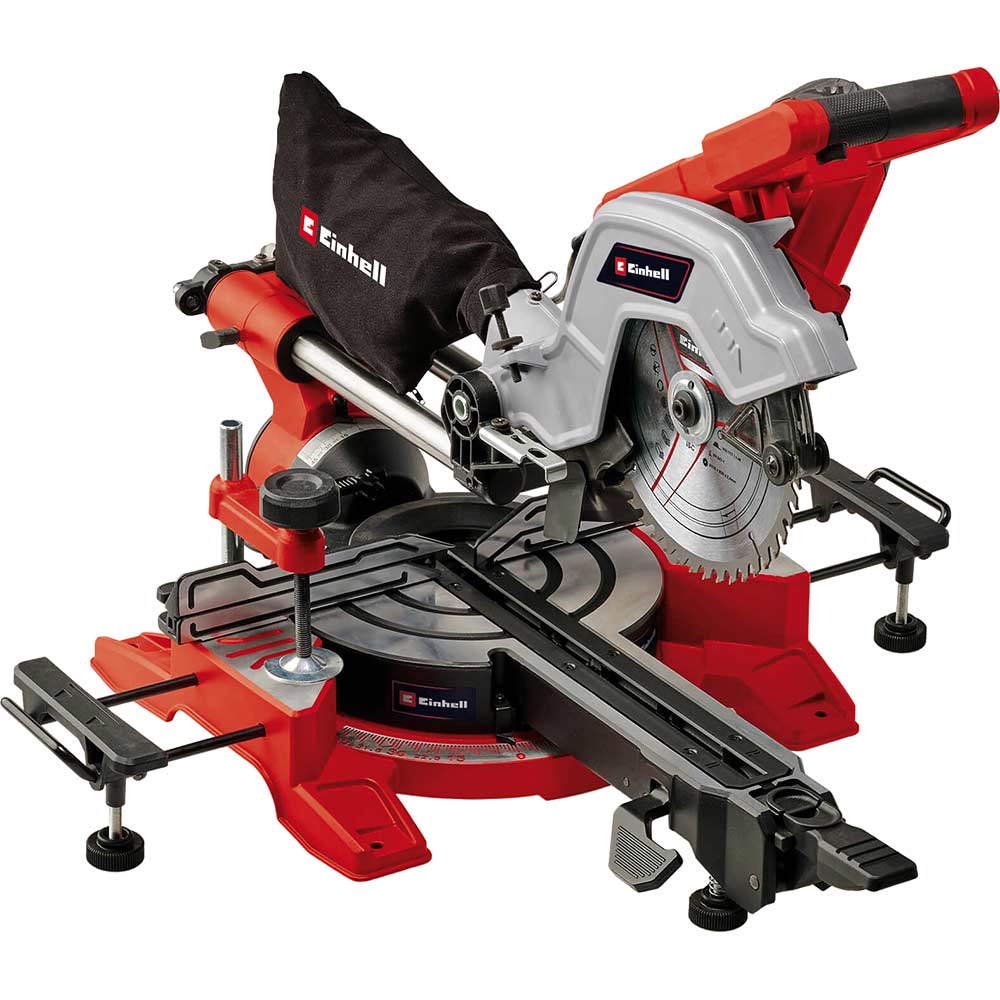
Two Einhell sliding saws lead the low priced end for value. The Einhell TE-SM 8 L costs under £200 for a 216mm blade, an 1,800W motor, 45 degree bevels both ways, 47 degree mitres and a laser. It cuts 305 x 65mm at 90 degrees, can cut grooves and weighs 13.25kg. The Einhell TC-SM 2131/2 is cheaper again at under £150. It's a 210mm dual bevel sliding saw with a 1,500W motor that cuts 310 x 62mm.
Either one covers skirting, shelving and garden timber at home. Compare them with the rest in cheap mitre saws and our mitre saws for DIY picks.
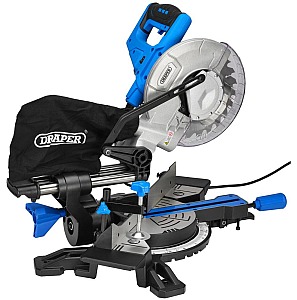
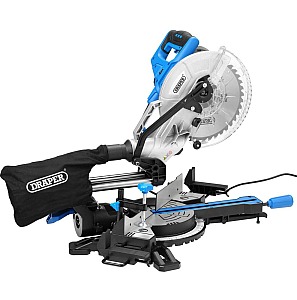
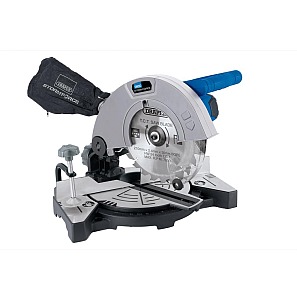
If you only cut architrave, battens, small trims and picture frame moulding, a fixed head compound saw does the job for under £80, which is good value for occasional use. The Draper MS210C (1,100W, 6.4kg) cuts 120 x 60mm. The Einhell TC-MS 2112 (1,400W) cuts 120 x 55mm and mitres 45 degrees both ways. Both tilt left for bevels. The catch is width: 120mm is the limit, against about 305mm on a sliding saw.
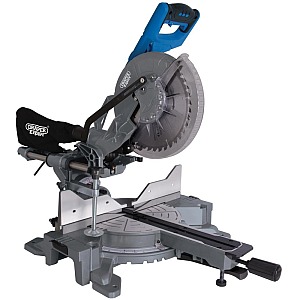
The Draper Expert SMS255E is a 255mm dual bevel sliding compound mitre saw with a 2,000W motor. It's the best value 254mm saw we list. It cuts 315mm wide and 90mm deep, as deep as some 305mm saws, for around £200. It weighs 18kg. The Einhell TE-SM 10 L (254mm, 2,000W, 305 x 85mm, 15.09kg) is a close match for a little more. Both suit decking, deep skirting and general joinery. See every 254mm mitre saw we list.
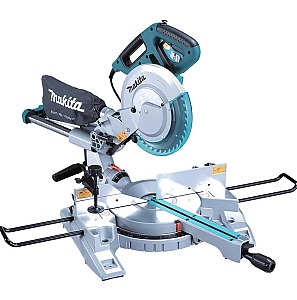
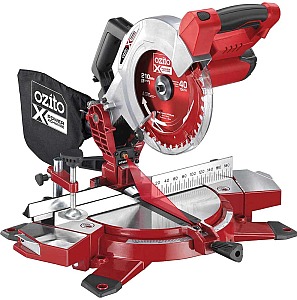
The Makita LS1219 shares the widest crosscut on the site, 382 x 92mm, thanks to its 305mm blade and long slide. It mitres 60 degrees and bevels 48 degrees both ways, with an electric brake and soft start. It's a 110V saw for building sites, weighs 29.3kg and sits around £900. The LS1219L is the same saw with a laser.
For a 240V workshop, the Bosch GCM 340-305 D cuts 340 x 105mm for around £650. Browse all 305mm mitre saws.
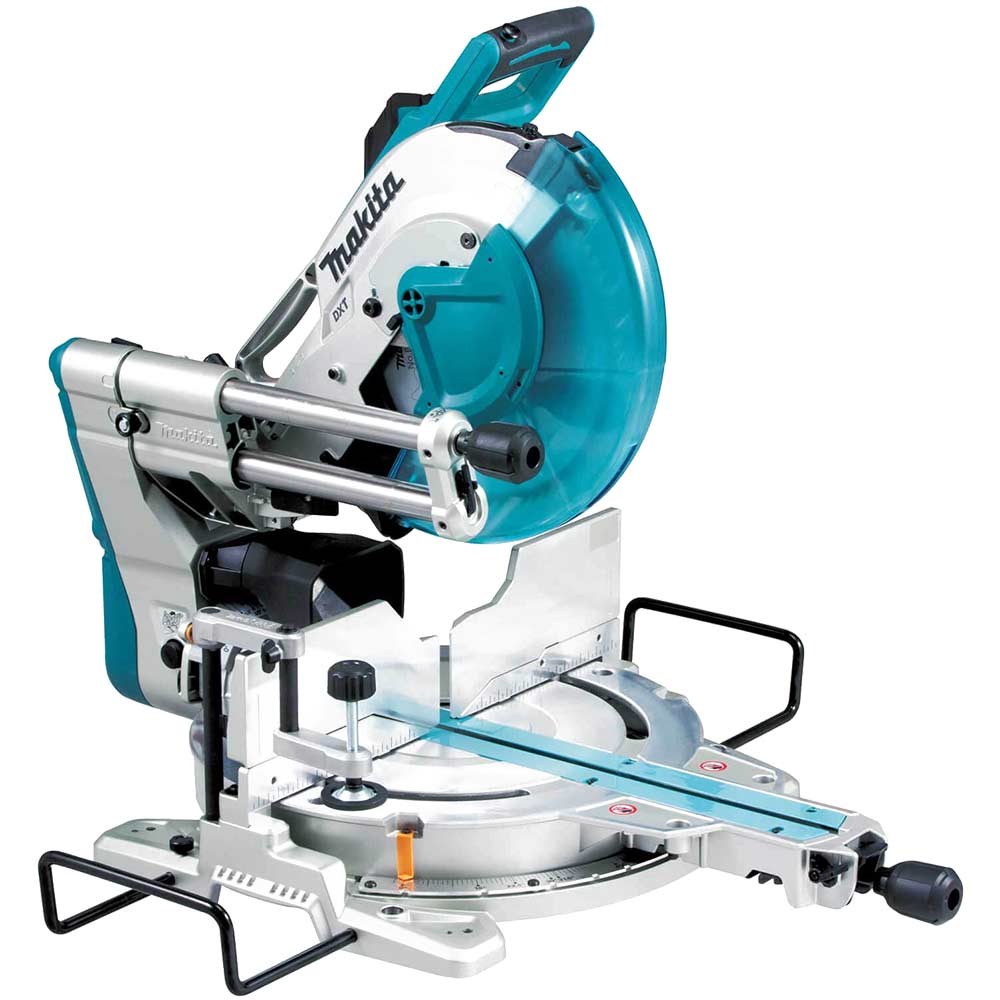
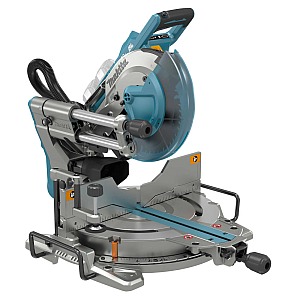
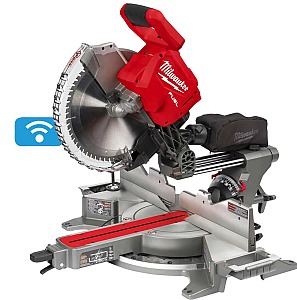
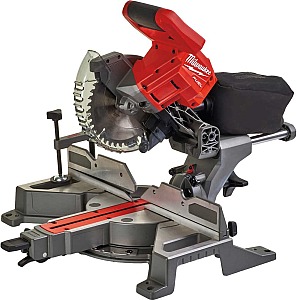
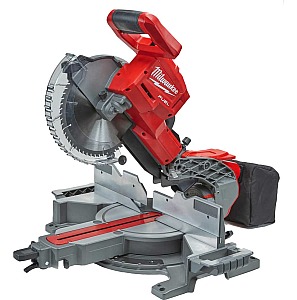
The Makita DLS211 runs on two 18V LXT batteries, has a brushless motor and matches the LS1219's 382 x 92mm cut, with a laser and 48 degree bevels both ways. At 30.7kg it lives on a stand rather than in your arms. It's sold bare at just over £1,000. The Milwaukee M18 FMS305 is a brushless saw that cuts 343 x 97mm on Milwaukee's M18 batteries for around £800 bare. Milwaukee also makes the M18 FUEL FMS254 (254mm, 289 x 91mm) and the compact FMS190 (190mm, 215 x 55mm, 12.7kg), both brushless dual bevel saws. Compare more in cordless mitre saws.
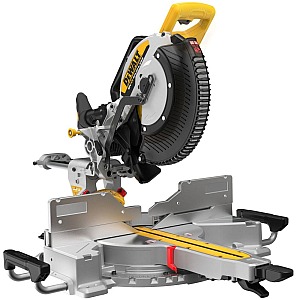
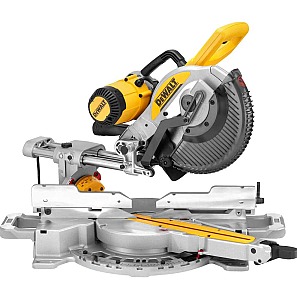
The DeWalt DWS780 is a 305mm dual bevel sliding compound mitre saw with DeWalt's XPS shadow line. It cuts 303 x 110mm, the deepest crosscut we list. On its rails it reaches 345mm wide. It mitres 50 degrees left and 60 right, bevels 49 degrees both ways and runs at 1,900 to 3,800 rpm. Ours is the 110V version for site work, at around £700.
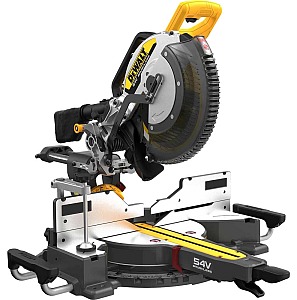
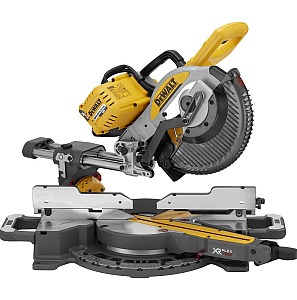
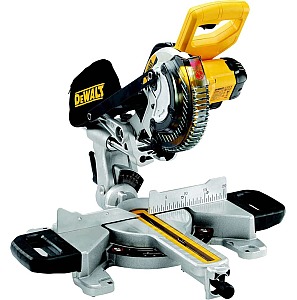
For cordless work, DeWalt's 54V FlexVolt saws come in 216mm (DCS777), 250mm (DCS727) and 305mm (DCS781). The 18V XR DCS782 is a brushless 305mm saw that cuts 310 x 90mm. See all DeWalt mitre saws.
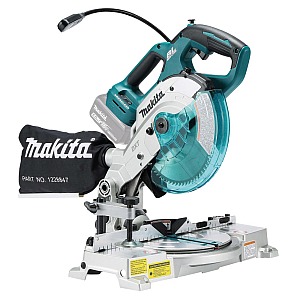
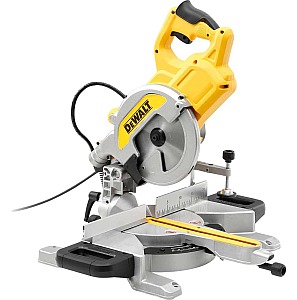
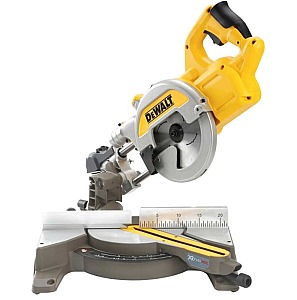
For carrying up stairs and into finished rooms, the DeWalt DCS365N is a 184mm 18V XR sliding compound mitre saw that weighs 11.5kg and still cuts 250 x 50mm. Its XPS light throws the blade's shadow onto the work, so the cut line needs no setting up. Bare, it's under £400. The Makita DLS600Z is lighter again at 6.3kg. It's a 165mm dual bevel compound mitre saw with an electric brake and soft start, but it cuts 92 x 46mm, so it's a trim saw. Both are in small mitre saws.
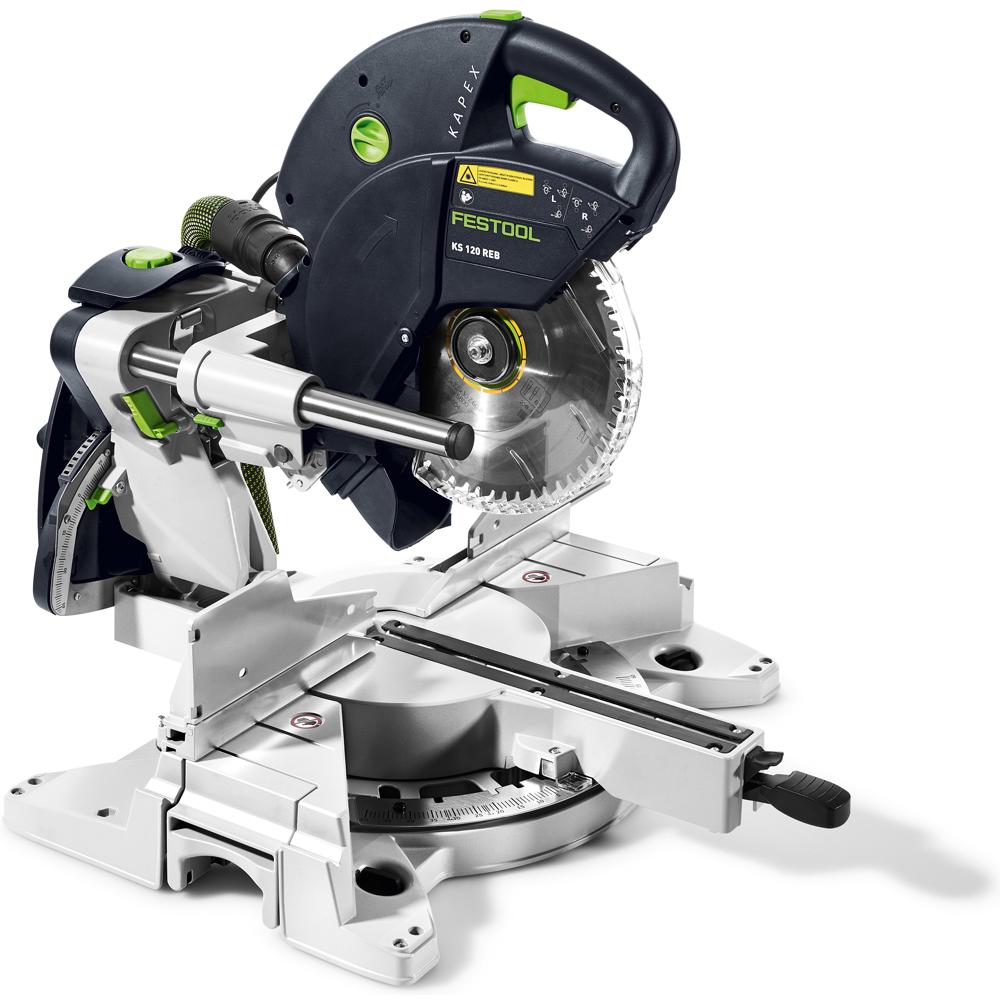
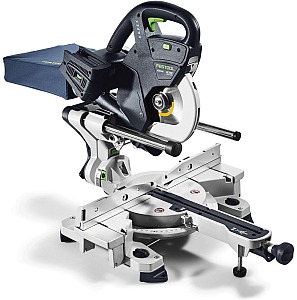
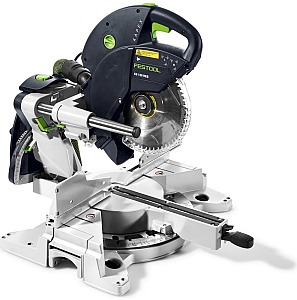
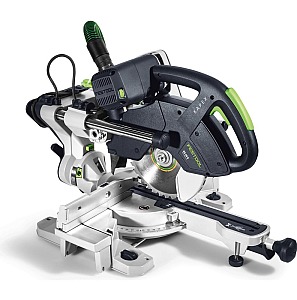
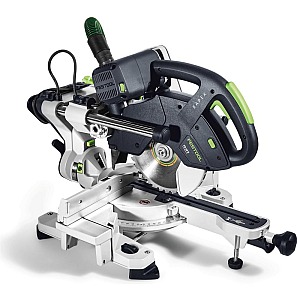
The Festool Kapex KS 60 E is a 216mm dual bevel sliding saw that mitres 60 degrees both ways and bevels 47 degrees left and 46 right. Its speed runs from 1,300 to 3,500 rpm, an LED spotlight sits over the cut and it cuts 305 x 60mm at 17.8kg. At around £860 it's a finish carpenter's saw, best paired with a Festool extractor on its 27/36mm port. See the Festool range.
These figures come from the product listings. The cut is width x depth at 90 degrees with the blade upright. Prices are a rough guide, as they change daily.
| Saw | Blade | Power | Bevel | Cut at 90° | Weight | Rough price |
|---|---|---|---|---|---|---|
| Makita LS002G | 216mm | 40V XGT cordless | 48° both ways | 312 x 70mm | 16.4kg | £800 bare |
| Bosch GCM 305-216 D | 216mm | 240V corded | 47° both ways | 305 x 70mm | 16.8kg | £450 |
| Einhell TE-SM 8 L | 216mm | 240V, 1,800W | 45° both ways | 305 x 65mm | 13.25kg | Under £200 |
| Einhell TC-SM 2131/2 | 210mm | 240V, 1,500W | Left and right | 310 x 62mm | Not listed | Under £150 |
| Draper MS210C | 210mm | 230V, 1,100W | 45° left | 120 x 60mm | 6.4kg | Under £80 |
| Draper Expert SMS255E | 255mm | 230V, 2,000W | 45° both ways | 315 x 90mm | 18kg | £200 |
| Einhell TE-SM 10 L | 254mm | 240V, 2,000W | 45° both ways | 305 x 85mm | 15.09kg | Under £250 |
| Makita LS1219 | 305mm | 110V, 1,450W | 48° both ways | 382 x 92mm | 29.3kg | £900 |
| Bosch GCM 340-305 D | 305mm | 240V, 1,800W | 47° both ways | 340 x 105mm | 21.4kg | £650 |
| Makita DLS211 | 305mm | 2 x 18V LXT | 48° both ways | 382 x 92mm | 30.7kg | Over £1,000 bare |
| Milwaukee M18 FMS305 | 305mm | 18V M18 | 48° both ways | 343 x 97mm | Not listed | £800 bare |
| DeWalt DCS365N | 184mm | 18V XR | Up to 48° | 250 x 50mm | 11.5kg | Under £400 bare |
| Makita DLS600Z | 165mm | 18V LXT | 46° both ways | 92 x 46mm | 6.3kg | £420 bare |
| Festool Kapex KS 60 E | 216mm | 240V, 1,200W | 47° left, 46° right | 305 x 60mm | 17.8kg | £860 |
The ranking at the top of this page scores every mitre saw out of 100 from the specs in its listing and today's price. Eight things count:
A spec the listing leaves out scores nothing, so a good saw with a thin listing can sit lower than it deserves. That's why we pick by job as well. Use the filters to cut the list down to your blade size, power source, battery platform or budget. Then open any saw for its full specs.
In the UK most people use the two names for the same tool. You'll see "chop saw" on plenty of trade counters. Strictly, a chop saw only cuts straight down at 90 degrees, while a mitre saw also swings for angled cuts. On a compound saw the head tilts for bevels too. Nearly every saw in our ranking does all three, so if you want the best chop saw for wood, the list above is the one to use. Our mitre saw vs chop saw guide goes into the detail.
In the US it's spelt miter saw. American reviews of the best miter saw cover many of the same tools, with blade sizes in inches: 10 inch is about 254mm and 12 inch about 305mm.
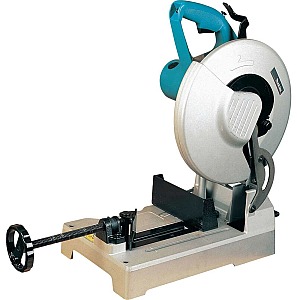
Metal is a different job. A metal chop saw uses an abrasive wheel or a slow running blade made for steel. It isn't built for the clean, square cuts in timber that a mitre saw makes. For steel, see our metal chop saws and the guide to cutting metal with a mitre saw.
A circular saw is cheaper and cuts sheet material and long rips that a mitre saw can't. For repeat crosscuts, mitres and bevels on lengths of timber, a mitre saw is quicker and more accurate, because the work sits against a fence and the blade comes down the same path every time. Our circular saw vs chop saw guide compares the two.
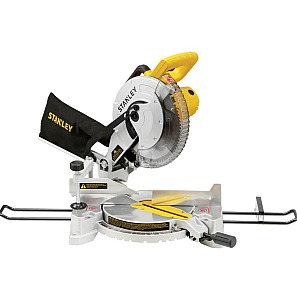
A compound mitre saw pivots down into the work, swings for mitres and tilts for bevels. With no rails it's lighter, cheaper and fits on a small bench. The trade off is width. The 210mm fixed head saws we list cut 120mm wide and the 254mm Stanley SM1650 cuts 140 x 75mm. Most are single bevel. That's fine for architrave, battens and small timber. See compound mitre saws.
On a sliding mitre saw the head pulls out over the work on rails, so a 216mm blade cuts boards around 305mm wide. Most saws in our ranking are sliders, because the extra width covers shelving, wide boards, worktop trims and long boards. Most need space behind them for the rails. Read more about sliding mitre saws.
A single bevel saw tilts one way, usually left. For the opposite bevel you turn the work end for end. A dual bevel (double bevel) saw tilts both ways, which saves time and keeps the good face up on long runs of skirting, coving and crown moulding. About half the saws we list are double bevel. See double bevel mitre saws.
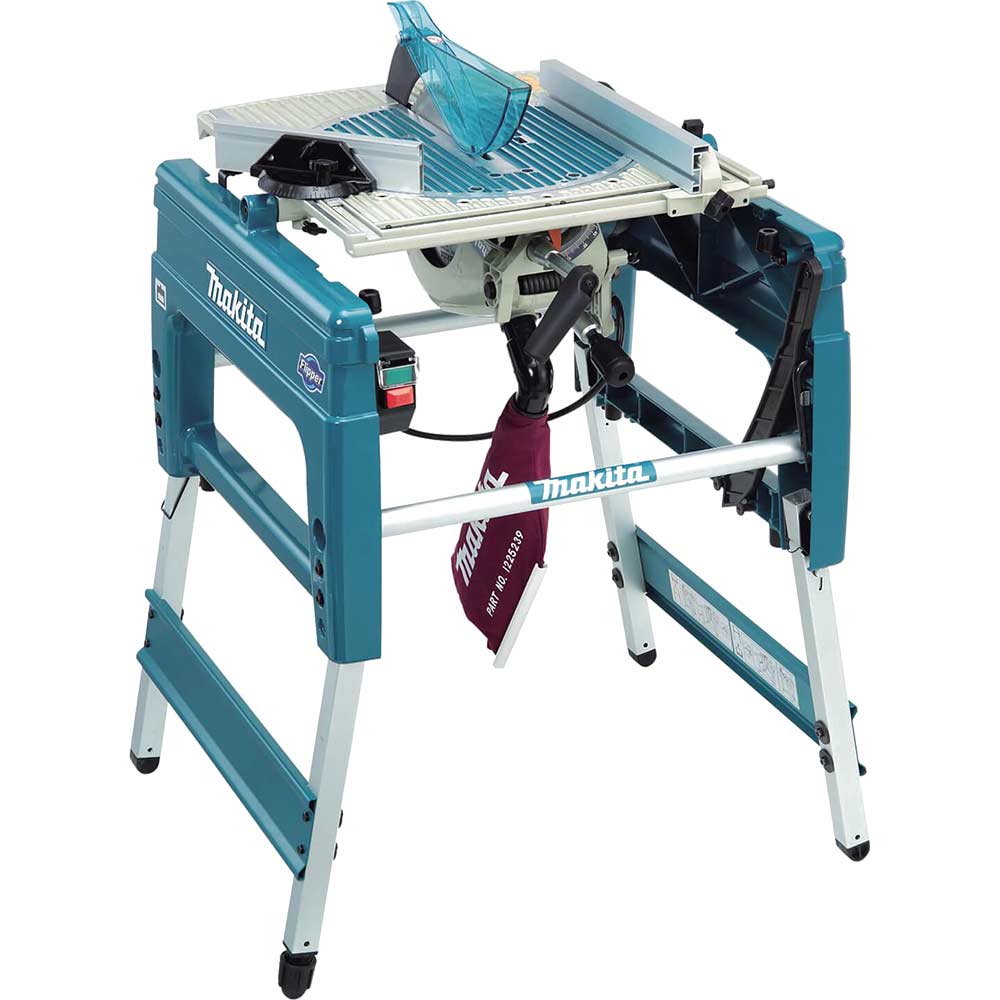
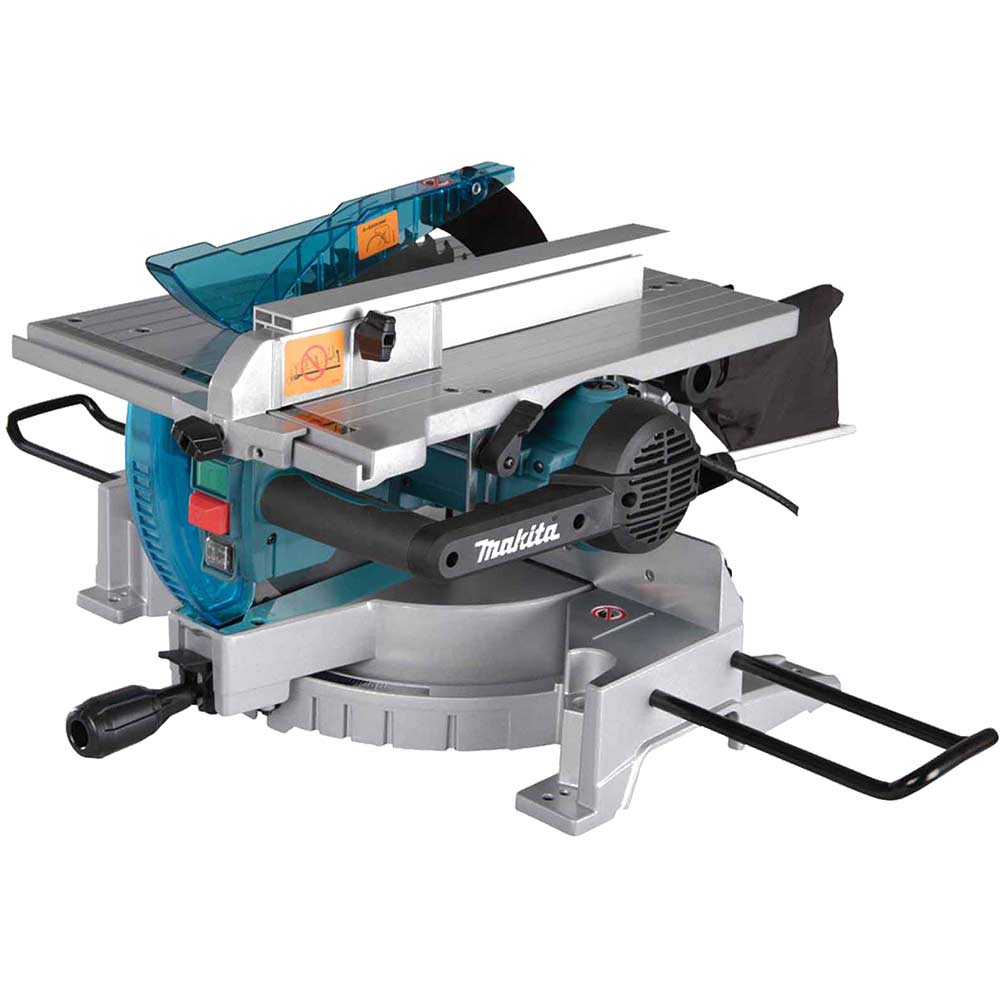
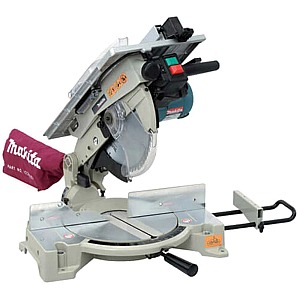
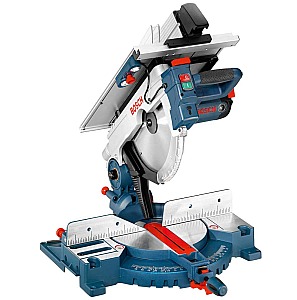
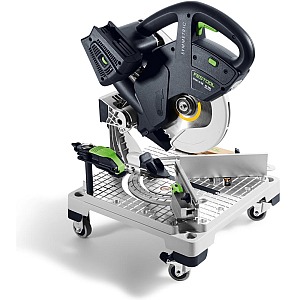
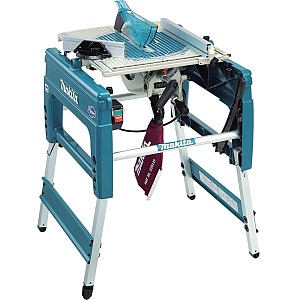
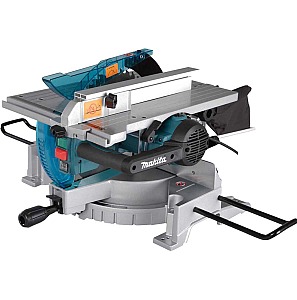
A flip over saw turns over to become a small table saw for ripping. The Makita LF1000 cuts 155mm wide as a mitre saw and rips up to 70mm deep on its table. The Makita LH1040 is a 260mm mitre saw with a small saw table on top. The Bosch GTM 12 JL combines a 305mm mitre saw and a table saw. They suit site joiners who want one machine in the van. Our mitre saw vs table saw guide explains which you need.
Mitre saws are sold by blade diameter. The blade sets how deep the saw cuts, while the slide sets how wide. This is what each size cuts across the saws we list. From 210mm up the figures are for sliding saws, as fixed head saws that size cut about 120 to 140mm wide.
| Blade size | Width at 90° | Depth at 90° | Weight | Good for |
|---|---|---|---|---|
| 165mm to 190mm | 92 to 300mm | 46 to 55mm | 6.3 to 13.5kg | Trim, architrave, flooring, carrying to the job |
| 210mm to 216mm | 220 to 315mm | 60 to 70mm | 10.5 to 18.9kg | Skirting, door linings, shelving, most DIY |
| 250mm to 260mm | 289 to 340mm | 68 to 91mm | 13.8 to 26.6kg | Decking, deep skirting, kitchen fitting |
| 305mm | 303 to 382mm | 90 to 110mm | 21.3 to 30.7kg | Joists, posts, wide boards, workshop use |
For most homes a 216mm sliding saw is plenty. It cuts a 47 x 100mm stud, a decking board or a 150mm skirting board laid flat with room to spare. Move up to 254mm when you often cut timber over 70mm thick. Some 305mm saws cut 100mm posts in one pass: the DeWalt DWS780 cuts 110mm deep and the Bosch GCM 340-305 D 105mm.
Our what size mitre saw do I need guide matches each size to the timber you use. You can also shop 216mm mitre saws on their own.
Check the width and depth at 90 degrees and at 45. A saw's 45 degree mitre cut is always narrower: the Bosch GCM 305-216 D drops from 305mm to 215mm wide. Measure your widest board, then leave a margin.
Every sliding saw here mitres to at least 45 degrees. Some go further. The Makita LS002G, Makita LS1219 and Festool KS 60 swing 60 degrees both ways, which helps on walls that aren't square. Click stops at common angles such as 22.5 and 45 degrees make the usual cuts quick to set.
Accuracy comes down to a square fence, a blade that runs true and a head that slides without play. When the saw is new, check a test cut against a square and adjust the fence or the bevel stop if it's out. A tall fence supports skirting and coving stood upright. Clamp the work to the fence so it can't creep. Repeat cuts then stay accurate.
A laser projects a line onto the work, but it needs lining up with the blade and can drift. An LED shadow line, which DeWalt calls XPS, lights the blade so its shadow falls exactly where it will cut, with nothing to adjust. Bosch's twin lasers show both sides of the cut.
An electric brake stops the blade quickly once you let go of the trigger, so you can lift the head sooner. Soft start brings the motor up to speed gently, which takes the kick out of switching on. Several Makita saws in our list have both.
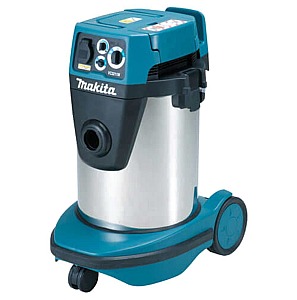
Dust collection on a mitre saw is never perfect, because the blade throws dust out of the back and sides. Most saws come with a dust bag, which catches some of it. Indoors, connect an extractor to the dust port. The HSE warns that wood dust can cause asthma and that hardwood dust can cause cancer. For cutting wood on site it advises on-tool extraction with an M or H class extractor. Our mitre saw dust extraction page lists extractors that fit.
Corded saws we list run from 1,100W to 2,100W. Cordless saws run on 18V, 20V, 36V (two 18V packs), 40V or 54V. A brushless motor runs cooler and gets more cuts from each battery than a brushed one, so it's worth having on a cordless saw.
The saws here weigh from 6.3kg to over 30kg. If you carry a saw from the van every day, that matters as much as capacity. A big sliding saw also needs a bench or a stand with room for long lengths either side.
A corded 240V saw is the cheapest way to get a big blade and it never runs flat. That suits a garage or workshop. Cordless saws go anywhere. The bigger ones now cut as much as corded saws: the Makita DLS211 on two 18V batteries matches the 110V LS1219 at 382 x 92mm. Our DeWalt cordless mitre saws page covers the XR and FlexVolt models.
Buy cordless on a platform you already own. The saws we list run on Makita LXT 18V and XGT 40V, DeWalt XR 18V and FlexVolt 54V, Milwaukee M18, Bosch Professional 18V, Einhell Power X-Change, Festool 18V, Draper D20 and Flex 18V. Most are sold body only with no battery or charger, so check what's in the box before you order.
Most UK building sites ask for 110V or cordless tools. HSE guidance says to use cordless tools or tools that run from a 110V centre tapped to earth supply, so the voltage to earth is no more than 55V. That's why Makita and DeWalt sell 110V versions of their bigger saws to run from a site transformer. At home, a standard 240V saw is fine. See professional mitre saws for 110V and trade models.
You'll also see Evolution, Metabo and Ryobi mitre saws in UK shops. They aren't in our retailer's range, so they aren't ranked here.
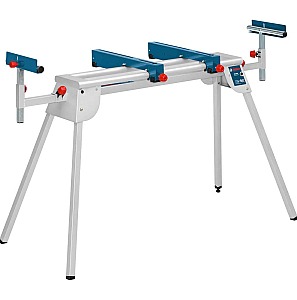
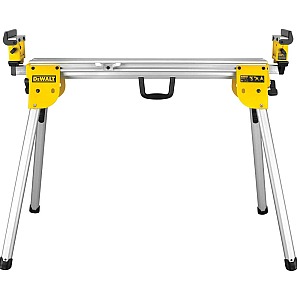
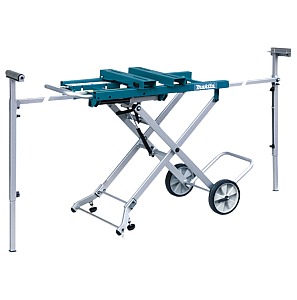
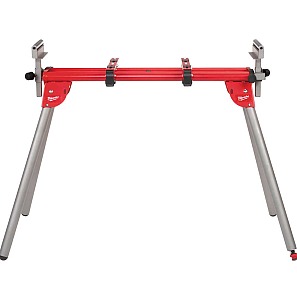
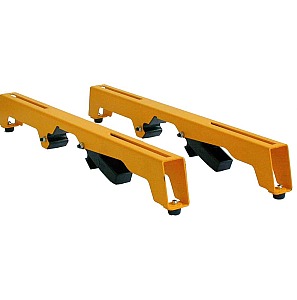
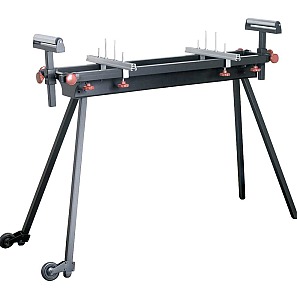
A stand turns a heavy sliding saw into a saw you can set up anywhere, with arms to hold long lengths level. Brand stands fold flat for the van. Universal stands take most makes. See mitre saw stands and universal mitre saw stands.
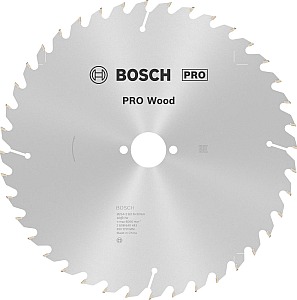
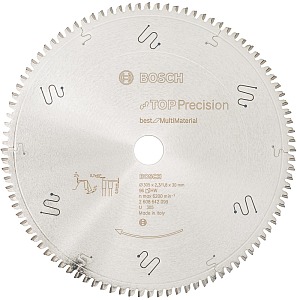
The blade decides the finish. Match the diameter and bore to your saw. More teeth give a cleaner cut on skirting and trim, while fewer teeth cut faster through construction timber. Shop mitre saw blades by size, or the mitre saw accessories such as clamps and dust bags.
Hold or clamp the work tight against the fence and keep your hands well away from the blade's path. Wear safety glasses and ear defenders. Connect a dust bag or an extractor and wear a dust mask indoors. Let the blade reach full speed before it touches the timber, then let it stop before you lift the head. Unplug the saw or take the battery out before you change the blade.
Our guides show the steps for how to use a mitre saw, changing a mitre saw blade, cutting skirting boards and cutting coving corners.
For most DIY jobs a 216mm sliding saw is the sweet spot. The Einhell TE-SM 8 L costs under £200 and cuts 305 x 65mm with double bevels and a laser. If you already own 18V batteries, a bare cordless saw on the same platform saves money. See our mitre saws for DIY page.
A 216mm double bevel sliding saw handles almost all skirting. The slide cuts tall boards laid flat and the double bevel saves flipping long lengths. Our mitre saws for skirting boards page has the shortlist.
Yes, if you cut anything wider than about 120mm. A fixed head 210mm saw stops at 120mm wide, while a 210mm or 216mm slider cuts around 305mm. If you only cut architrave and battens, a fixed head saw is cheaper and lighter.
A 216mm slider cuts decking boards with room to spare. For joists and posts, a 254mm saw cuts up to about 90mm deep and some 305mm saws cut 105 to 110mm, enough for a 100mm post in one pass.
Not with a wood blade. Some saws take a blade made for metal, but only fit one if the saw maker allows it. For steel, a metal chop saw is the right tool.
Only for building sites. Most UK sites ask for 110V or cordless tools, with 110V saws run from a site transformer. At home or in your own workshop a 240V saw is fine.
For capacity, the big ones are. The Makita DLS211 on two 18V batteries cuts 382 x 92mm, the same as the 110V Makita LS1219. Corded saws cost less for the same cut and never run flat, so they still suit workshops.
In the UK the names are mostly used for the same tool. Strictly, a chop saw only cuts straight down, while a mitre saw also cuts angles. Metal chop saws are a different machine made for steel.